Blog Post #3- The Environmental Costs of Breakfast
The environmental impacts of producing my breakfast of pancakes, bacon, hash browns, fruit, eggs and apple pie reach further than one might think. The majority of bacon consumed in Wisconsin is produced by Nueske's Applewood Smoked Meats. This production of smoking bacon takes place in Wittenberg Wisconsin. Then, when examining the production of the eggs I had with my breakfast, they were most likely also produced in Wisconsin. The production of bacon and eggs have very hazardous effects to groundwater, in fact to produce a single strip of bacon, a quantity of manure 80 times the weight of that strip was produced. On most industrial pig farms such as Nueske's Applewood Smoked Meats, this manure is stored and then spread upon nearby fields. This manure cannot all be absorbed by the field and therefore manure pollution leaks into groundwater, polluting it. The runoff of manure from egg facilities also leaks into surface water and carries excess nitrogen and phosphorus which pollutes nearby water resources. The process of disposing of manure also pollutes the soil.
Fossil fuels are burned to synthesize chemical fertilizers in order to support crops used to feed pigs and chickens. Similarly, as pig and chicken manure decomposes, nitrous dioxide and methane are released into the atmosphere. This process contributes to the emission of greenhouse gasses, not necessarily carbon dioxide emissions but nonetheless this contributes to climate change and pollutes the atmosphere, negatively affecting air quality. These impacts can be considered local in terms of groundwater and soil in Wisconsin being polluted by the production of pork as well as egg production. Farm land and surrounding towns are most directly affected by the runoff from chemicals and manure. These impacts can also be considered global because pollution of the atmosphere travels throughout the globe. The following resource provides more insight to the negative environmental impacts of bacon production:
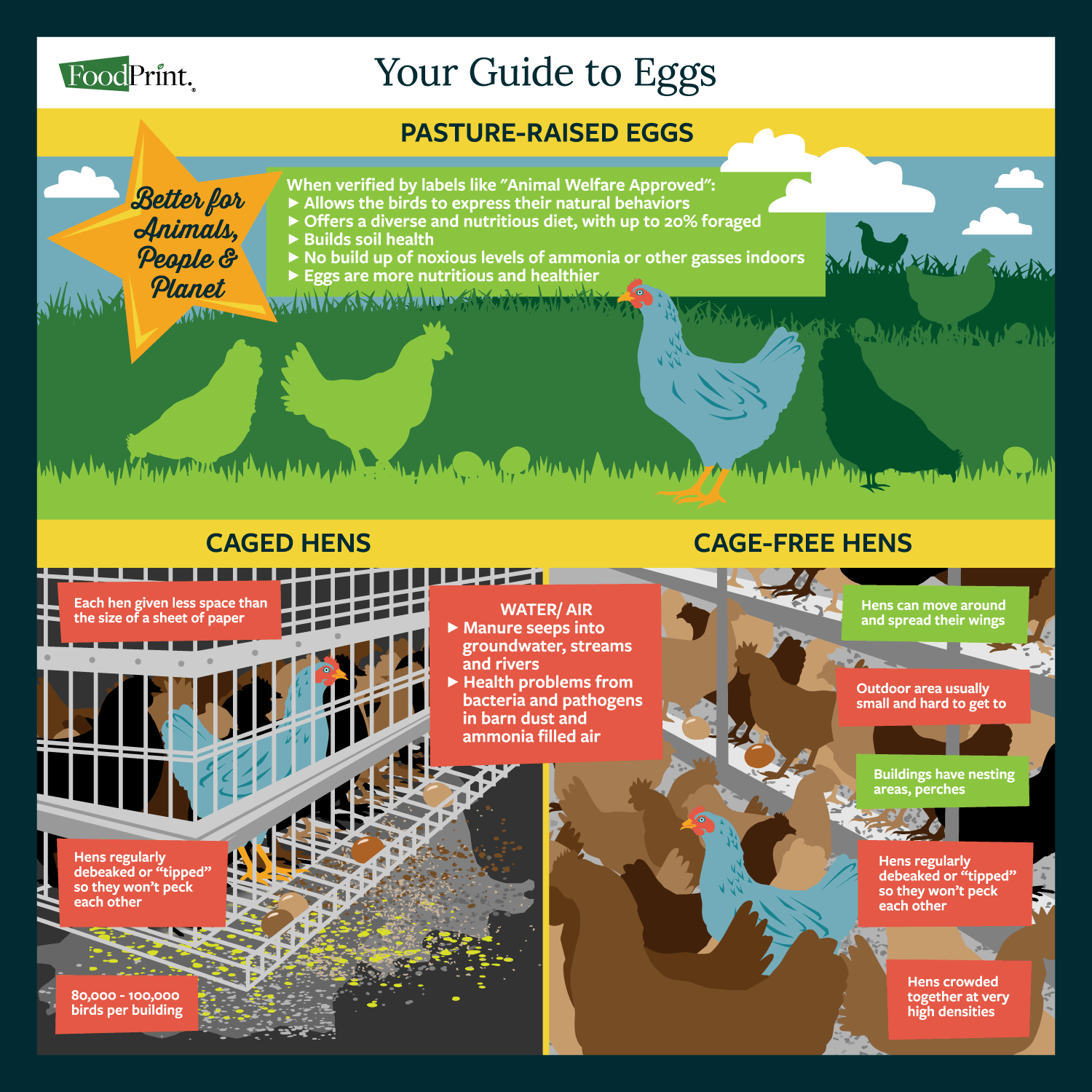
*Image depicts the reality of the egg industry
After examining the environmental impacts of the production of eggs and bacon, the impacts of the transportation, distribution and consumption can now be examined. My meal was consumed at a restaurant, therefore it can be assumed that they received the ingredients by truck. Wisconsin is one of the leading potato producing states, therefore it can be assumed that the potatoes used in the hashbrowns in my meal were grown here and transported by truck as well. The bacon, eggs and hashbrowns all presumably were transported to the restaurant in equal distance because they were manufactured in Wisconsin. Therefore all of these ingredients could be considered local because they were grown in the state. Bacon is always packaged in plastic which cannot be recycled. Egg cartons, if made of cardboard, can be recycled, and the waste from potato bags will end up in the trash as well. The plastic encasing the bacon as well as the potato packaging will end up in a landfill. Landfills are known to produce methane and carbon dioxide which contribute to air pollution and inevitably, climate change.

*Map to illustrate the large bacon market in the United States


Comments
Post a Comment